

Stage 1 vs Stage 2 Tune: What's the Difference for VW?
Posted by Awesome GTI on 4th Sep 2026
A stage 1 tune is often the first proper mod any VW owner makes. It's the moment a car that's always felt like it's holding something back finally gets to show what that something is, without a single spanner going near the engine bay.
The trouble is, the second you start reading up on it, stage 1 gets tangled up with stage 2 pretty fast, and forum threads don't always help. One post says stage 2 is just stage 1 turned up a notch, the next insists you need a full parts list before you even think about it. So, let's clear it up properly.
This guide runs through what actually changes at each stage, what your car needs before it goes in and what you're likely to pay.
In this guide:
- What Is a Stage 1 Tune?
- What Does a Stage 1 ECU Tune Actually Change?
- Stage 1 Tune Requirement: What You Need Before You Book
- What's the Difference with a Stage 2 Tune?
- Stage 1 vs Stage 2: The Key Differences at a Glance
- How Much Does a Stage 1 Tune Cost?
- How Much Does a Stage 2 Tune Cost?
- Does a Stage 1 Tune Affect Your Warranty or Insurance?
- Does a Stage 2 Tune Affect Your Warranty or Insurance?
- Which Stage Is Right for Your VW?
What Is a Stage 1 Tune?
What is a stage 1 tune? It's a software only remap that works within your VW's factory hardware. There’s no new turbo and nothing physically bolted to the engine. The ECU is reprogrammed to adjust boost pressure, ignition timing, fuel delivery and rev limits, coaxing out power the engine always had in reserve but was never allowed to use from the factory. So, basically, it’s the same engine and parts with a smarter set of instructions telling it how to behave.
Because a stage 1 tune doesn't need any supporting hardware, it's usually the first upgrade owners reach for, and it's easy to see why. For most standard VW engines it's the single best value performance upgrade going, since there's nothing else to buy or fit before you feel the difference. It's reversible too, so if you ever sell the car or fancy taking it back to bone stock, we can restore the original map.
What Does a Stage 1 ECU Tune Actually Change?
A stage 1 ecu tune touches boost, timing, fuelling and throttle response. On a turbocharged VW, that means boost pressure gets pushed up within the limits the factory turbo and internals can handle. Spark timing gets tightened where the engine has room to give more without risking knock, and the fuel map gets adjusted to match the extra air going through the engine. The result is a car that wakes up the moment you touch the throttle, pulls that bit harder through the mid range and just feels keener everywhere, all from the hardware you drove in with.

Stage 1 Tune Requirement: What You Need Before You Book
There's not much of a barrier to entry here, which is part of the appeal. The main stage 1 tune requirement is that your car needs to be in good mechanical health before it goes in for a remap. It doesn't need to be pristine, just sound. That means no outstanding fault codes or exhaust leaks that would throw off the fuelling. It also means no known issues with the clutch or DSG.
Beyond that, most stage 1 tunes work with a fully standard car, though a decent induction kit or a less restrictive exhaust can help the engine breathe a little easier.
We'd also recommend a rolling road session before and after. It doesn't change what the tune does, but it shows you exactly what your car is putting down rather than relying on someone else's dyno graph from a forum. Most stage 1 tunes, including that rolling road check, are done within a couple of hours, so you'll be driving away the same day.
What's the Difference with a Stage 2 Tune?
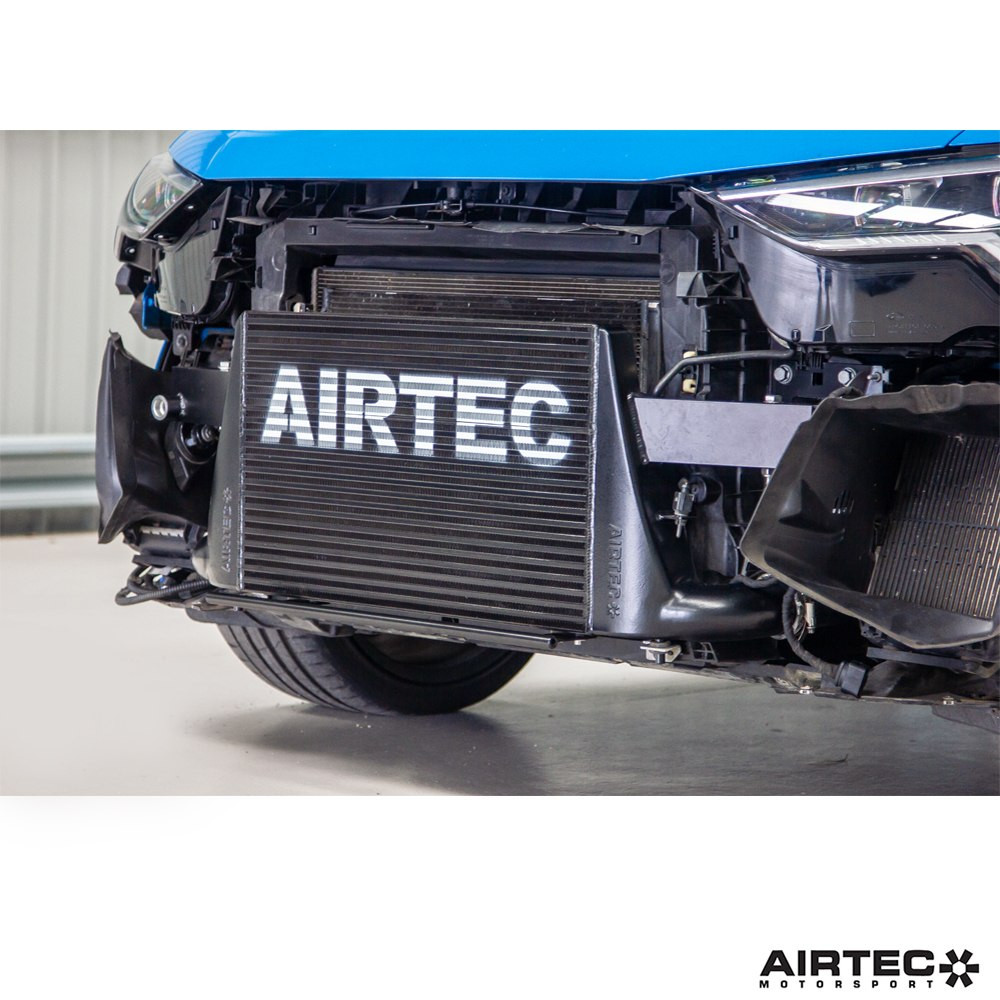
Stage 2 is where supporting hardware comes into play. A stage 2 tune assumes you've fitted parts that let the engine breathe and cool better, such as a bigger intercooler or an upgraded intake. With that hardware in place, the ECU can be tuned harder because the extra air and heat generated by higher boost has somewhere to go instead of just cooking the engine bay.
You can only jump straight to stage 2 if that supporting hardware is already fitted. Without it, it isn't really a stage 2 tune, it's just an aggressive stage 1 map with nowhere for the extra air to go. Push a stage 2 map onto a car still running the standard intercooler and exhaust, and you'll likely see heat soak, fuelling issues, a car that feels flat rather than faster or the ECU pulling power back to protect itself.
Stage 1 works with what you've already got. Stage 2 needs a few changes made first. If any of those changes touch the exhaust, it's worth checking they stay within UK road legal limits for noise and emissions before you commit to them.
Stage 1 vs Stage 2: The Key Differences at a Glance
Here's how the two stages stack up side by side.
| Stage 1 | Stage 2 | |
|---|---|---|
| Hardware required | None, works on standard parts | Intercooler, exhaust, intake and supporting fuelling upgrades |
| Typical power gain | Roughly 15 to 30 percent over stock, engine dependent | Often 25 to 45 percent over stock, hardware dependent |
| Reversible | Yes, back to standard map | Yes, though supporting parts stay fitted |
| Best suited to | Daily drivers wanting sharper response | Owners planning a bigger build |
The right stage for your car comes down to how it's driven day to day and what you're planning further down the line.
How Much Does a Stage 1 Tune Cost?
Stage 1 tune cost varies depending on the software brand and your specific engine, but you're typically looking at a few hundred pounds for the remap itself. It's worth checking exactly what's included. Some prices cover the software only, others bundle in a rolling road session so you get before and after figures on paper rather than a promised number.
We'd always suggest asking what's included before comparing prices between suppliers, since a cheaper headline figure sometimes leaves out the power run altogether. Have a look through our remap range to see what's included with each option, including APR's stage 1 software.
How Much Does a Stage 2 Tune Cost?
Stage 2 costs more, and it's the hardware rather than the remap itself that pushes the bill up. The software side is usually a similar price to stage 1, but once you add an intercooler, an intake, an exhaust and the labour to fit it all, most owners are looking at four figures rather than a few hundred pounds. It's worth pricing the whole job, including parts and labour, before you commit to any one piece.
Does a Stage 1 Tune Affect Your Warranty or Insurance?
It can affect both, and it's worth sorting before you book rather than after. Remapping the ECU may affect your manufacturer warranty, so check your policy or ask us what cover you'd have first. On the insurance side, a stage 1 tune changes your car's performance from the manufacturer's specification, and UK insurers expect that declared even though nothing under the bonnet has physically changed. Not declaring a performance modification can invalidate your cover.
Does a Stage 2 Tune Affect Your Warranty or Insurance?
Yes, and it carries the same requirements as stage 1, only more of them. The remap needs declaring just like any stage 1 tune, and so does every piece of supporting hardware you've fitted alongside it. More parts on the list means more for your insurer to know about, so it's worth getting a modified quote before the work goes in rather than after.
Which Stage Is Right for Your VW?
If your car's still fully standard and you want an honest step up in power without spending on supporting parts first, a stage 1 tune is the sensible starting point. If you've already got the hardware in place, or you're planning a build that goes beyond daily driving, stage 2 lets the ECU make proper use of it. Every engine, mileage, service history and driving style is a little different, and a five minute conversation with someone who knows VAG cars inside out will save you more than any generic guide can.
Still unsure, or just want to chat to some experts before you commit? Get in touch with